
surviving natural disasters

We had an epic tornado come through Manitoba and over Winnipeg this week. It didn’t touch down in our city, but it made its presence known. Large hail, some the size of tennis balls. Wind knocking down trees and powerlines. Rain, filling the storm drains and overflowing into homes. Twenty thousand homes were without power for more than 24hrs. Ours was one of them. Thankfully we did not experience water damage or any fallen trees. But we were very aware of that potential. We hid in the basement with candle-light till it passed. The next day we called family to help with ice for our food and power banks to charge our phones. We played cards, talked to each other…you know…human stuff.
Many smaller towns were hit much harder losing their entire home to water and sewage damage. This is not a rare event. But for us, who don’t live on the tornado path, it felt substantial. I know that in many parts of the world, natural disasters are a more common part of life. Preparations and lifestyles are adjusted.
For me, living in the heart of Turtle Island means our main concerns are flooding, drought, and deep freeze which could freeze pipes. Yes, we live with frigid cold weather for half the year, but we are adapted to it.…somewhat! We adapt by using hydro power to heat our homes!
I was not born in Winnipeg but my father, his parents and their parents all lived on the Prairies from the 1900’s on. So three generations have lived on these lands prior to my return. Does that mean fridgid winters and intollerable mosquito survival is in my blood? Lol! I’m not sure!
When I’m in a freakout, panic mode, I tend to deep dive into survivalism of other cultures. For example, Kiun, from Siberia shares stories on youtube about experiences of growing up in the coldest inhabited region on Earth, Yakutia. Adaptations such as sponge bathing in their sauna once a week. Cold water for most activities. Leather and fur clothing. Caring for herds of horses and cattle in extreme cold. I find it difficult to imagine.
I am dependent on many many things. But not in the way the Yakuts are. I don’t rely on animals to feed and clothe me. I don’t rely on wood to heat my home. I don’t rely on ice to provide water in the winter. Though all those things were how we survived only a hundred years ago! And for many remote villages in the North…living without clean water, electricity and sewer treatment is still a reality.


I have a lot of questions! The above images show ice cutting traditions and storage from the 1900’s. This is how my Grandma (who would be 100 this year) and her parents survived!
When we transitioned from a human/animal-fueled society to an oil/machine-fueled society, we severed our connections to the land. But, we also gained more human rights. Right? Didn’t we?
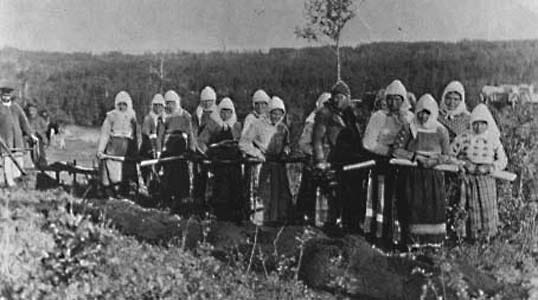
Pictured below are fourteen Doukhobor women pulling a breaking plough from 1901. Clearly they were very poor and could not afford a horse or ox team.
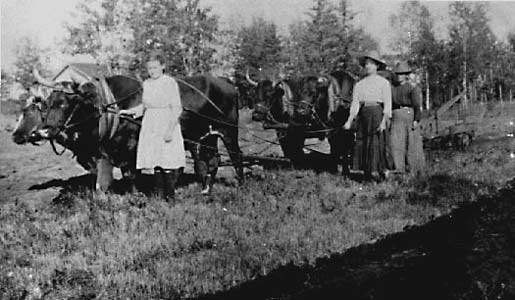
Next shown are four women walking four oxen to the field. A big upgrade!
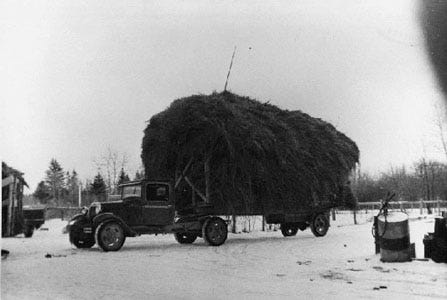
And next, we see a massive load of hay on a trailer pulled by a gas-powered engine. An even bigger upgrade.


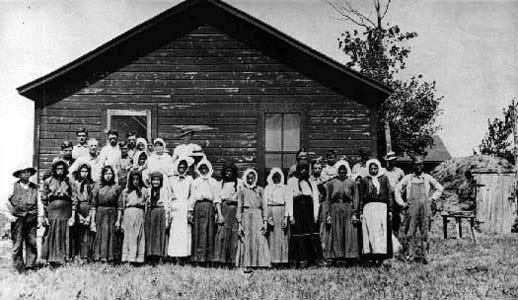
In my search through historical archives of largely Euro-decent, immigrant farmers on the Prairies, I noticed most of the workers were women and children. Out in the fields. Working with the turkeys, gathering eggs, churning butter, harvesting berries, threshing and winnowing grains by hand. These are stories that live in my viens. Some were written down in my father’s family memory book to which I have not read yet.
What this shows me is not that women held the knowledge of managing the land for families to survive. It’s that they were the grunt labourers. They withstood a great deal of the pain and suffering for their children to go on to live better lives.
The idea that we would want to re-aquaint ourselves with land stewardship through plant and animal knowledge still feels romantic and whimsical. But we need to be really clear what kind of land kindships we want to form. Are we hoping to return to isolated, large family units, farming the land with women and children and other “farm hands” labouring for survival? No! That system survives on patriarchal contracts of subjugation and dehumanizing hierarchies. What I am craving is a return to a hunter/gatherer survivalism. A susbsistence existence.
This takes courage, determination and faith in our biological makeup that rests solely on communalism and belief in the spiritual aliveness of all animate beings.
The tornado this week was another reminder to me of how humans will naturally rely on one another in times of crises. We are each other’s greatest prepper tool. Not the go-bag (though helpful), not the stash of food and water. Each other.
As we, in our modern era have moved further from hierarchy and oppressive treatment of other living beings (I want to believe this), we are learning that our species actually knew how to live in partnership with all living things. We knew how to travel, harvest, work and play in a sustainable manner. We were largely nomadic and traveled by water. We knew how to preserve food for the winter months and lived cyclically. Having different camps for the various harvest schedules. We were physically active and the work was demanding, but it was not devoid of laughter, companionship, pleasure, and immense beauty. We were not slaves to survival as the agriculturalists believed we had to be.
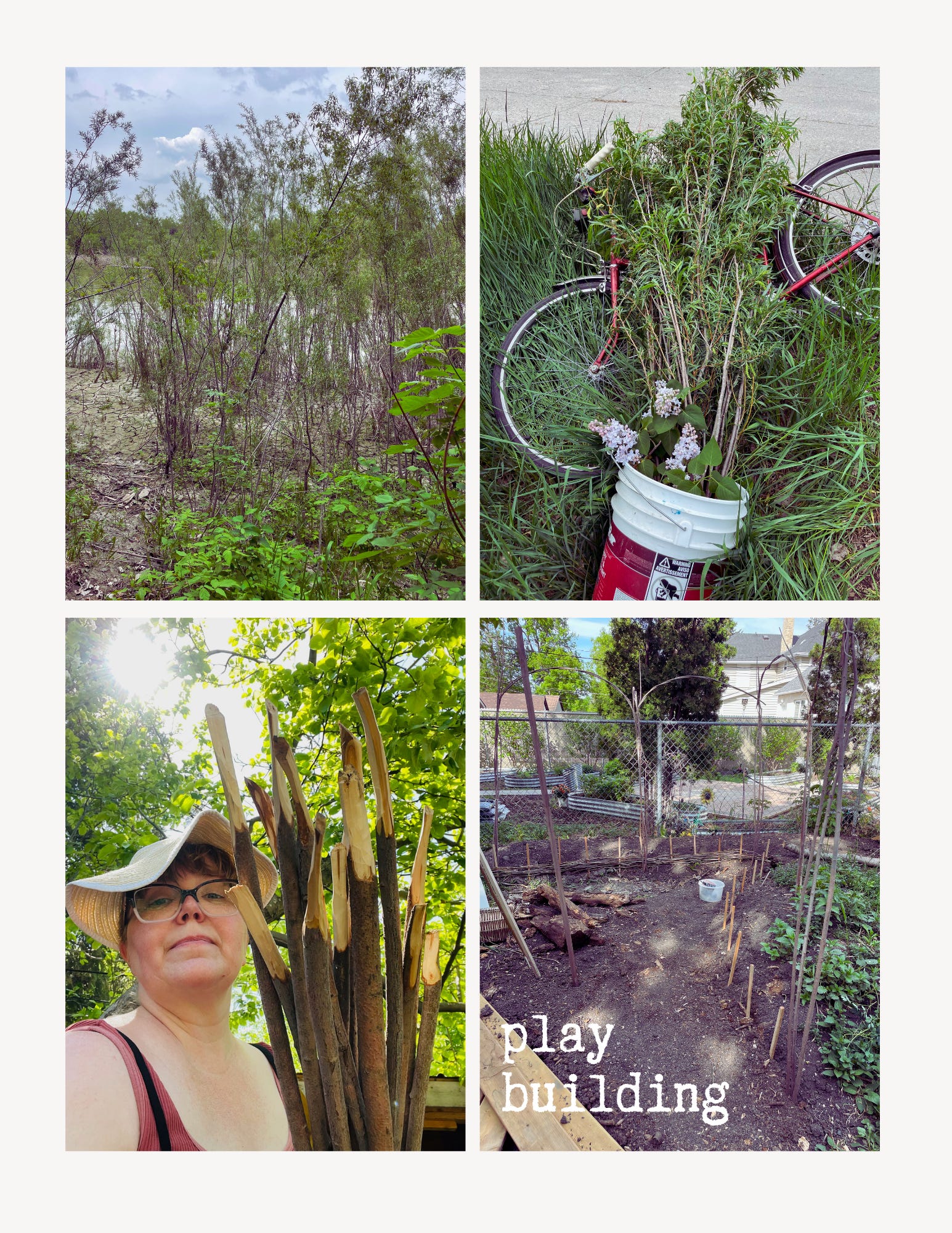
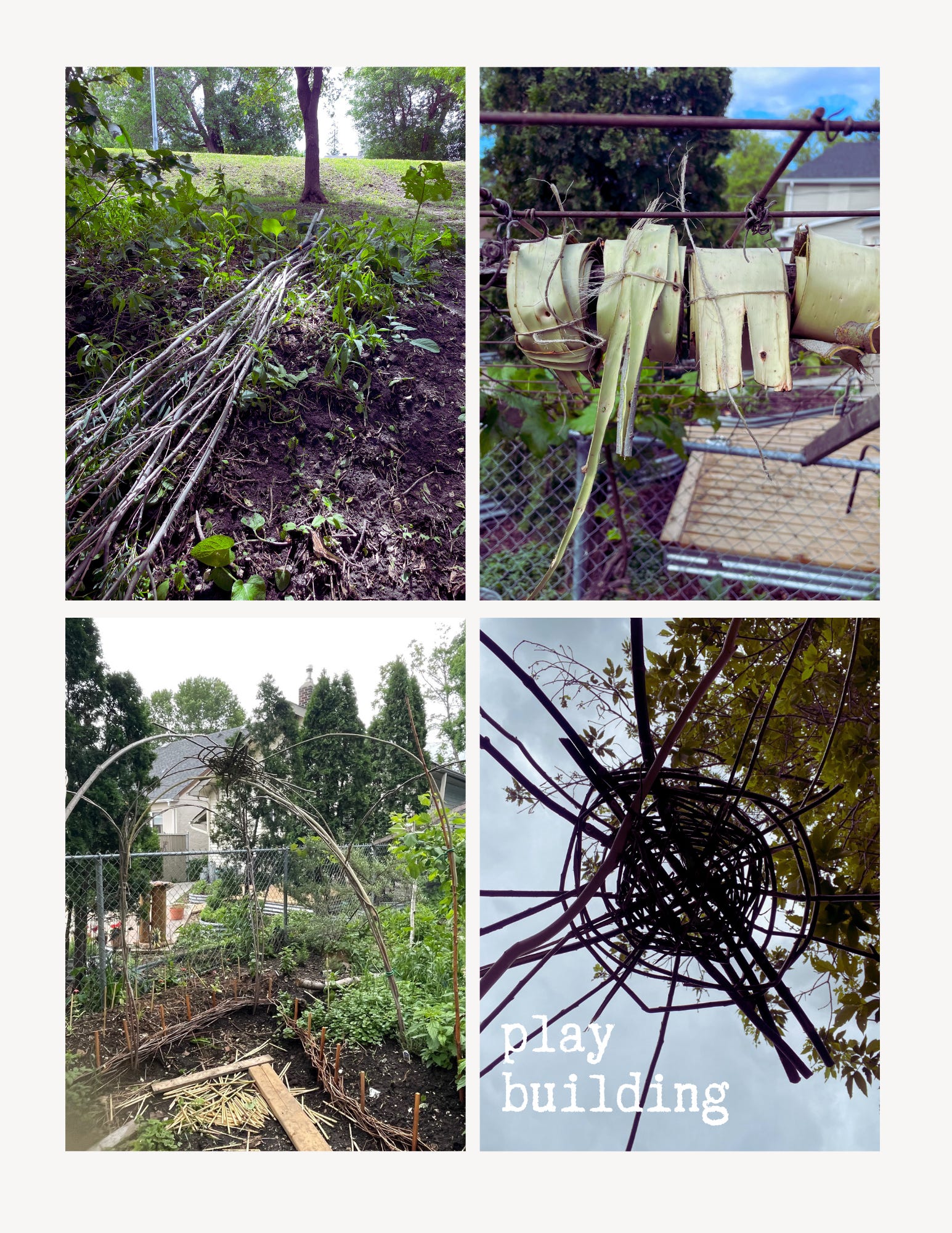
Previous to the storm I was fully immersed in connecting with my Willow relations. I had an idea to move my garden beds and create a new hugel bed (a log and compost heap with soil ontop to decompose and nourish plant roots) with a shade covering for creative hangs outside! I definitely did not think through all the steps and the work it would take to bring it to reality! These things tend to be slow going when done alone, in storm season! But I wasn’t alone. I had Jodi, my city co-harvester mate to re-learn about bark peeling. I had my online willow collective to share research and ideas with. And most of all, I had the trees! They brought with them so much healing love and wisdom.
Here’s a few things I learned from the river willow:
They love to be “pinched back” like other plants because they are multi-branch growers. They become stronger and live longer the more they are harvested appropriately by other creatures like us!
They are food and home to many bird and insect species
They help stabalize the river bank from erosion
They carry a lot of medicine (asprin derives from the bark)
Bark likes to be peeled when the sap is running in the spring
They are very helpful for building numerous structures such as small shelters, canoes, cradleboards, baskets and more
As Robin Wall Kimmerer says, “The land loves us back”. It responds well to our engagement with it. It has everything we need!
Enjoy the photo’s from my Willow harvesting season!
Love the archival photos. It's a harsh reality of living in the PNW that we live side by side with natural (and manmade) disasters. Wild fires every summer, drought, mud landslides, and the anticipation of the 'big' earthquake that will wipe us all out. Lots of our neighbours have generators for when we lose power; we haven't gone that far but we have candles and battery operated lights, a store of canned food and bottled water. Survival preparedness! It's a skill we all need to learn. Glad you're okay.